On the Backs of Small Animals
Now afterthoughts amidst the spectacle of Alaskan wildlife, small animals with their luscious furs were once a fulcrum upon which local history unfolded. Beyond being a base material aiding survival in the Far North, fur has symbolized wealth, status and fashion across populations and time. The “Fur Trade” Westernized the North American continent and was originally the primary avenue through which Natives and Non-Natives enmeshed. Indigenous peoples hunted the animals and traded their pelts to Americans and a grand mix of Europeans in exchange for Western goods. Complexities ensued.
Lingít Aaní (Tlingit territory) of the Northern Lynn Canal in Southeast Alaska had its own unique relationship to the changes engendered by contact with Western culture and goods. This exhibit is an artistic exploration of that history, namely that of the Jilḵáat and Jilḵóot Ḵwáan (Chilkat and Chilkoot Tlingit people) of my home in Haines, Alaska. Elements of Russia, Britain, America, Canada and China all came in ships to these shores, not only bearing trade goods (and liquor and disease) but also ideas and values. These were incorporated in specific ways by the Jilḵáat and Jilḵóot people, and their interrelated Inland trade partners, the Dän K’e (Southern Tutchone), Tā̀gish and other groups of the Athabaskan Interior in what is now the Yukon Territory. I am exploring that story through the animals that live here and were trapped for the cause.
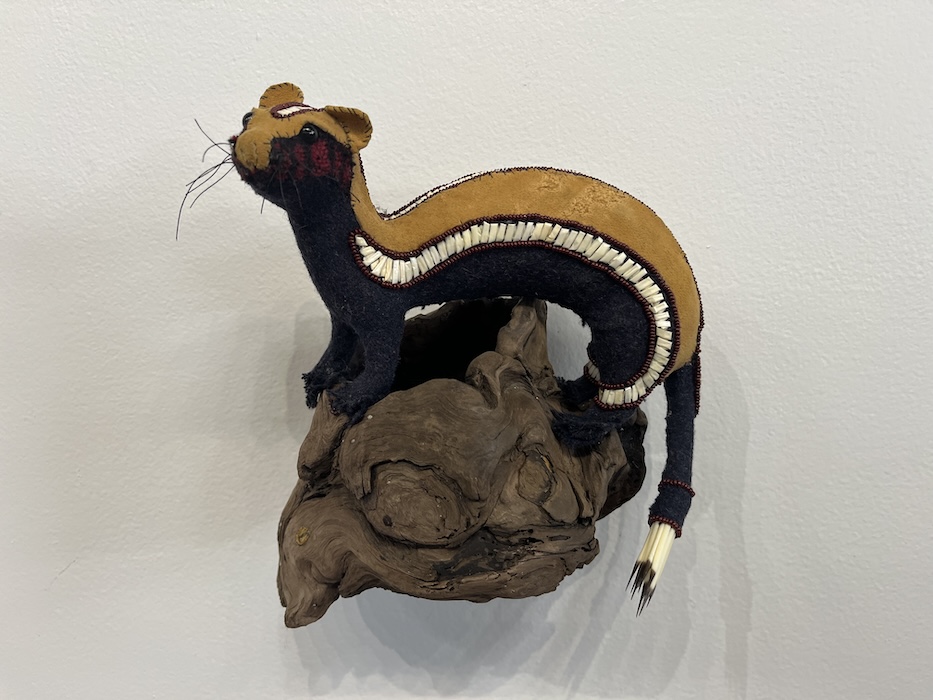
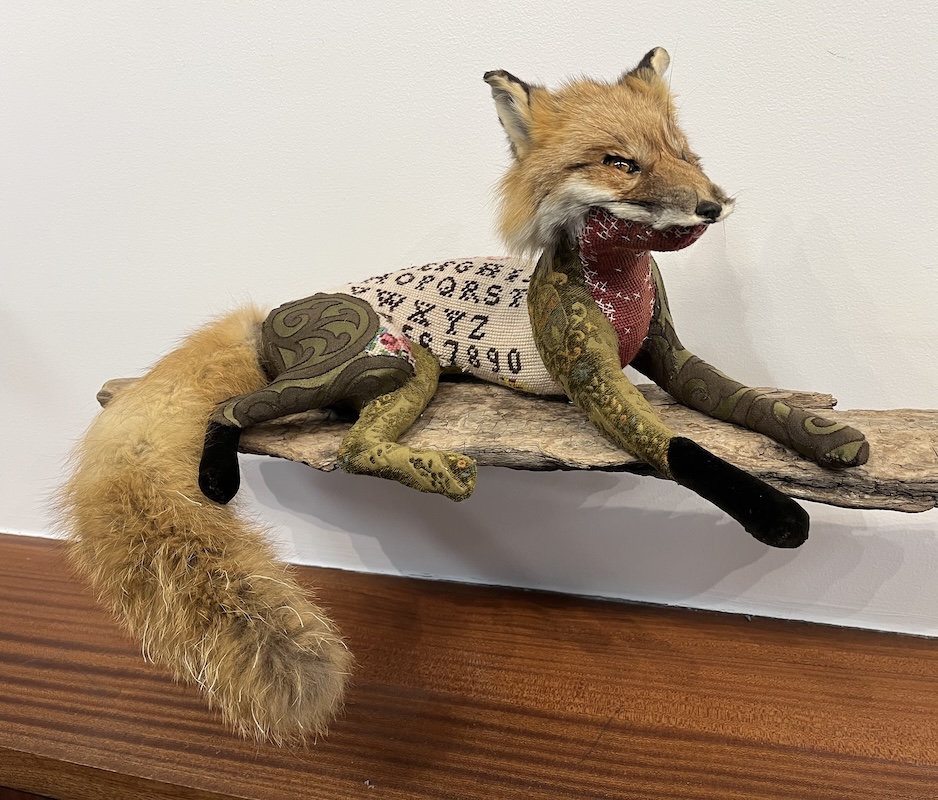
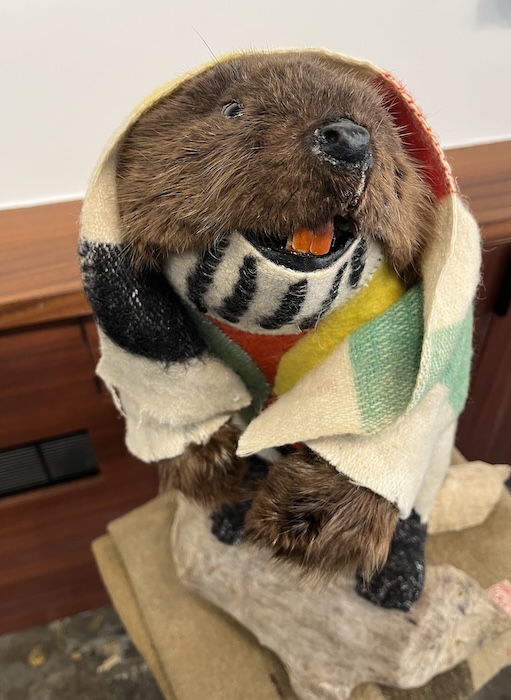
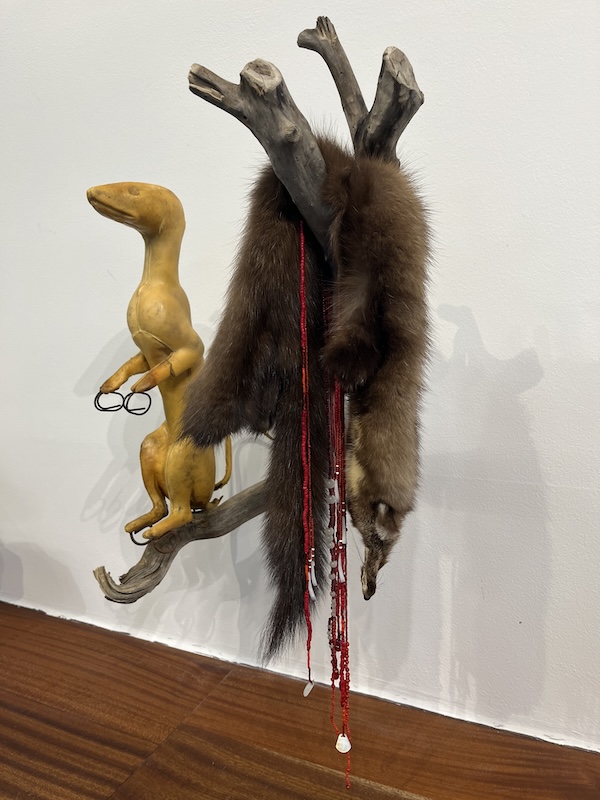
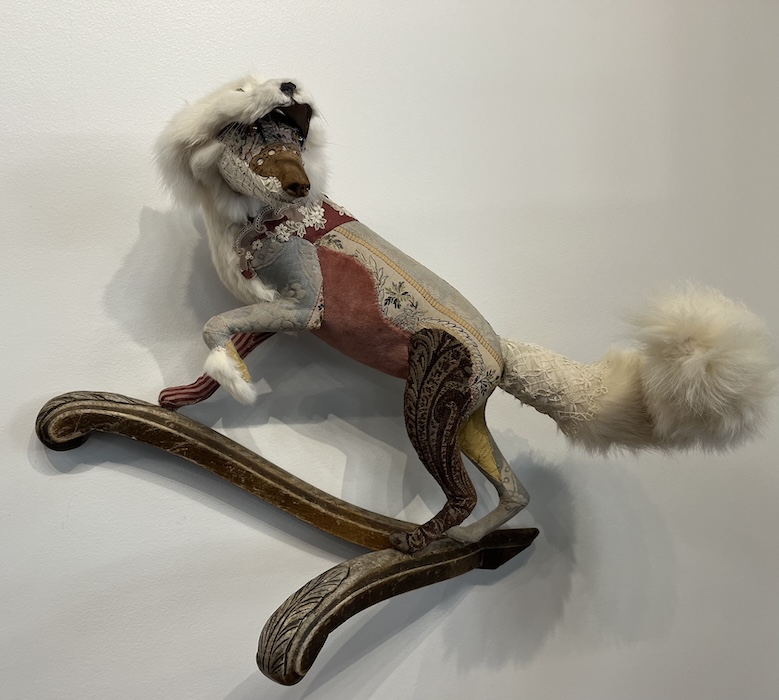
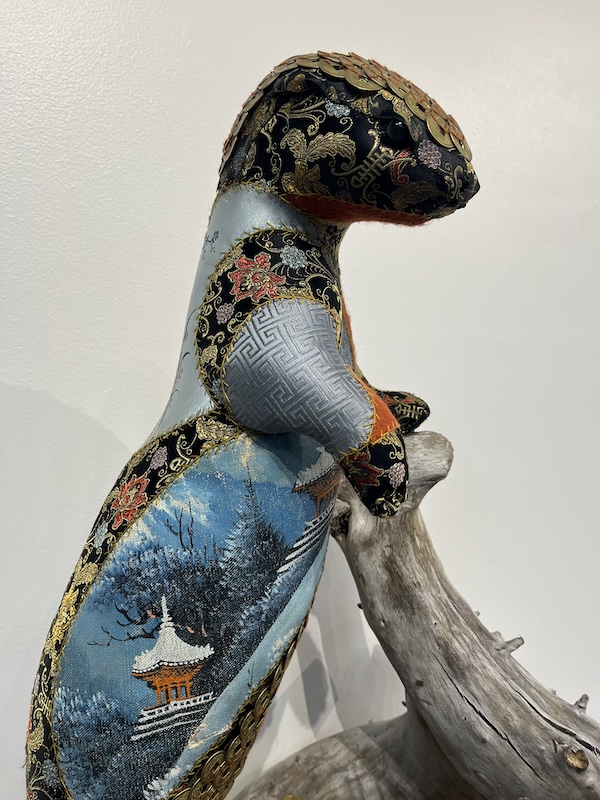
This work reflects an era that saw an influx of foreign materials and values to the region and primarily examines how those factors were desired, acquired and incorporated into existing cultures through a global exchange. From the all-consuming obsession with procuring felted beaver hats by upper-class Europeans and Americans, to the demand for sea otter pelts to create robes for the Chinese elite, the Fur Trade had brutal and far-reaching consequences. Animal populations were decimated and local cultures redesigned in the name of high fashion. This excessive pursuit and frivolous Western use of animal fur greatly contrasts with its regional context as a subsistence item. These pieces are meant to highlight that contrast through the mixing of textiles and related objects, placing them on the bodies of the animals themselves to give them a voice in the conversation.
Trapping furbearers endures as a cultural and economic tradition in Alaska and the Yukon. Fur is still an exclusive possession for some, and a survival aid for others. Somewhere between this fashion and practicality, fur remains a symbol of Northern life.
This is a growing collection of pieces intended to exhibit at multiple locations. I thank Alaska Robotics in Juneau for hosting its first manifestation and public debut; and I am happy you are here and stay tuned.
Andrea Nelson
Deishú, Jilḵóot Aaní
Haines, Alaska
Click Any Image to Enlarge